
2.2 KiB
Development kit: Raspberry Pico
This is the official development kit. It offers the following advantages:
- Low cost
- Parts are easy to find
- Low wiring/soldering: usage of a motherboard
- SWD debug port
Current status: ON DEVELOPMENT
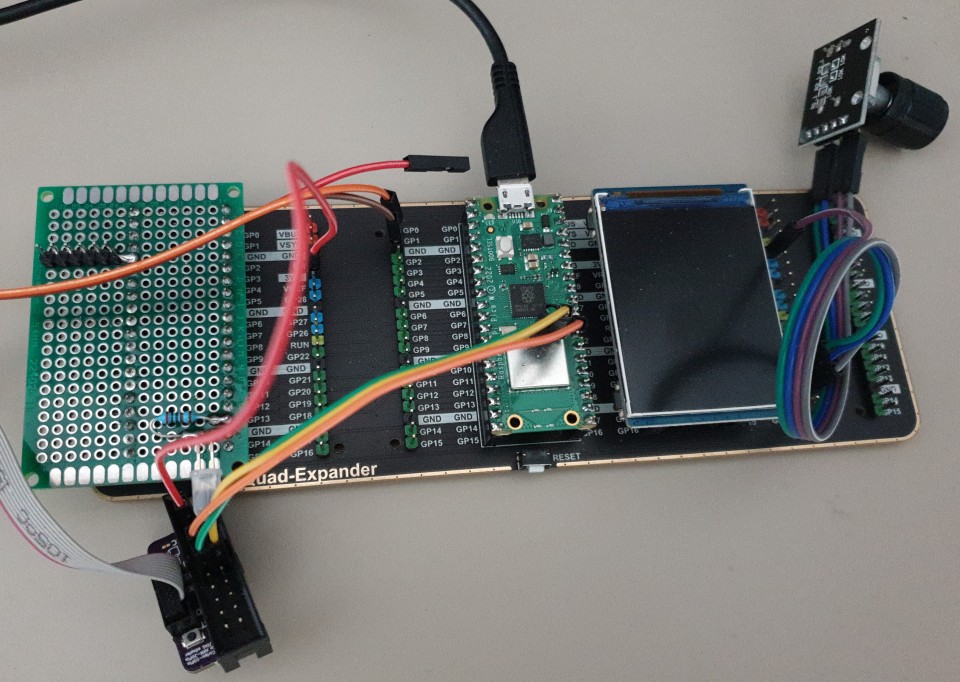
Bill of materials
The minimal list of components are:
| Part | Price | Shop |
|---|---|---|
| Audio board + speaker | 13 € | Waveshare |
| Raspberry Pico W | 9 € | Kubii |
| 2inch LCD (320x240) | 14 € | Waveshare |
| Some Pimoroni buttons are rotary switches | 4 € | Pimoroni |
| UPS module or Pimoroni LiPo Shim | 15 € | Waveshare |
| LiPo battery 500mAh | 9 € | Any |
| Carte d'extension GPIO Pico Decker | 15 € | Waveshare |
| TOTAL | 67 € |
In addition to this list, you may need some more materials such as wires, prototype boards, resistors...
We may propose in the future a PCB to help the connection without soldering.

Developers: how to build from the source code
Install build tools
Install build tools, example for a Debian based operating system:
- sudo apt install gcc-arm-none-eabi
- sudo apt install picolibc-arm-none-eabi
Download the pico SDK somewhere on your disk:
git clone https://github.com/raspberrypi/pico-sdk
Copy past the following command line, execute at the directory root. Replace the PICO_SDK_PATH value with the real location on your disk where you have installed the Pico SDK.
First, create a CMake build directory:
mkdir build
cd build
Then generate the makefile (we use the Pico toolchain here, so there is no specific toolchain file to setup.)
cmake -DCMAKE_BUILD_TYPE=Debug -DOST_BUNDLE=RASPI_PICO -DPICO_SDK_PATH=../pico-sdk -DPICO_BOARD=pico_w ..
This assume that the Pico SDK is located on the git project root directory. Change this path according to your real Pico SDK location.